Thursday, April 2, 2020
Kate's Sourdough Workshop videos
You will need:1/2 cup rye sourdough starter1.5 cups wholemeal rye flour (I recommend Four Leaf, which is organic, Australian, unprocessed and freshly milled)500g wheat bread flour, at least 50% wholemeal (I recommend Four Leaf 85%)1.5 tsp saltwater
Friday, May 18, 2018
Rekindling the spirit within
It is only weeks until I hand over my little wholefoods business to new blood. Tiny though it is, its creation and success has been in no small part due to my intensive commitment to sourcing organic, Australian ingredients from individual farmers and makers as well as the individual needs of my customers. The time involved in doing so has meant my head has had little room for the finer workings of my food garden and its seasonal systems.
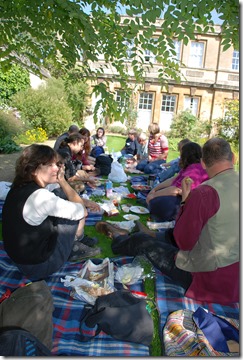
Last night I began reading some of the food gardening blogs in the side bar here and it has sparked a firecracker reaction in my heart and head to sow and plant all manner of interesting edible plants again. Maybe it will happen that I reconnect with old food gardening bloggers as well as find new ones, from far corners of our planet. Facebook has not taken them all away and turned them into clickers and likers; they are still there, writing and sharing their experiences to any who choose to come by. Below are the food gardening bloggers who gathered at the Oxford Botanic Gardens in 2008. None of us had ever met before but we had all read each others blogs.
As winter creeps in and my head loosens its ties to being a wholefoods sole-trader the spaces will be filled with the inner warmth that comes with sorting and sourcing seeds, reading and writing about food gardening and planning for more nooks in my garden, to grow unusual vegetables. I look forward to working in the cold, misty, winter garden, rugged up and conscious of the life there; in the soil, in the trees, in the pond and in the sky.
My house is full of books about growing and cooking. During these past 8 years I have not stopped buying and reading them. Now the future will be about the doing and the eating and the sharing and the pure joy of it all.
Life is good and I am almost there…..
Tuesday, February 27, 2018
February 2018 Kitchen Garden Guide
Pear and cherry slug
Watering tips
- Buy a rose (ie a hose fitting) that cascades like a watering can head and simply adjusts the flow by turning the head or operating a lever with your thumb. I bought mine from Bunnings. Never use a gun style or those dreadful ones that only change the shape of the jet. I think people who design watering attachments should have to be gardeners!
- For hand watering in the garden, water each plant for a few minutes. What I do is walk around the garden beds several times because it is quite hard to stand still and water one plant for very long!
- Use a sprinkler, if you are on town or dam water or have another plentiful supply. Leave it on for an hour. Reduce the frequency of your watering. The roots will grow deeper and withstand much hotter weather.
- Use a deep hay mulch, lightly shaken over the soil. The water will penetrate and not just water the roots but also keep the microbes happy where the hay meets the soil.
- For my tomatoes, which can suffer with diseases if watered overhead, I have installed a line of 13mm irrigation pipe and inserted finger drippers between each tomato plant. These have adjustable little knobs that distribute water out to the size of a spread hand, like fingers. I attach a hose once a week and leave it on for at least an hour. This way every tomato plant receives a deep watering over both sides, a good 30cms or more from the stem. As the plants mature and when the weather is cooler, they need less water. This is also good for cucumbers and zucchinis which prefer not to be watered on the leaves too much.
- Group plants together that have similar water requirements.
|
Seeds to
sow now
Broccoli raab
Kale
Beetroot
Shungiku
Lettuce
Asian greens (late Feb.)
Carrots
Spinach & silver beet
Spring onions
Hakurei turnips
Tas. swedes
Parsnips
Radishes
|
Plant out
now, yes now, or before!
Brussel sprouts
Cauliflower
Broccoli – regular, sprouting and raab
Lettuce
Jobs for
February
Plant or move citrus
Summer prune stone fruits
Prepare beds for autumn plantings
Save seeds for next spring
Give pots and the veg. garden some seaweed and fish
liquid feed in a hosable spray.
|
Books of the month
Dark Emu by Bruce Pascoe
The Mix and Match Guide to Companion Planting by
Josie Jeffery
Australian Herbal by Penny Woodward
|
December 2017 Kitchen Garden Guide
Priorities
Mildew and other fungal attacks
Plant out in the damp soil
Camouflage, deception and more
Growing Basil ….
December Jobs |
January Jobs
|
|
Sow seeds: beans, squash, cucumbers, basil, carrots,
celery, lettuce, leeks, parsley, sunflowers, radish, parsnip, pumpkin,
chicory.
|
Sow seeds: Lots of winter veg benefit from summer
sowing so they reach a good size to plant out in autumn: fennel, Brussel
sprouts, red cabbage, leeks, kale, beetroot.
|
|
Plant out: corn, tomatoes, cucumbers, pumpkin, other
veg seedlings, potatoes, potted herbs,
Basil: keep in
greenhouse in good sized pots with rich soil and water well but allow to
drain well before watering again.
Fill in spaces
with flowers, comfrey, daisies, herbs and love.
|
Dec and Jan:
- Mulch vegetable
garden well, preferably with old hay
- Mulch fruit
trees well, preferably with bark chips
- Feed food
garden with seaweed solution for pest resistance and fish emulsion or home
made brews
- Harvest and
enjoy!
|
November Kitchen Garden Guide
Grass
Codling moth
November is beans time.
Jobs for November |
|
|
Sow indoors or transplant and protect:
Cucumbers (Lebanese), zucchinis (Romanesco), corn, pumpkins.
Sow or plant in the garden:
Salad leaves (not just lettuce!), brassicas (cover with moth
netting), most herbs, salad and spring onions, beetroot, fennel, carrots,
celery, parsnip, sunflowers and more!
|
|
October 2017 Kitchen Garden Guide
Tasmanian plants for the kitchen garden
Citrus care.
- October is a good time to feed your citrus.
- Don’t use too strong if your plants are in tubs or you may burn their shallow roots.
- Sprinkle 1 tsp. Epsom salts around each pot, or more if in the ground. Water in well.
- Give a liquid feed such as seaweed and fish, all over all the foliage and soil, every 2 weeks.
- Mine live on my sunny and windy verandah and thrive. I move them forward as the angle of the sun rises, to get as much sun as possible.
- The frost damaged citrus in my garden will not get this treatment until they are looking stronger.
|
Sow in October
|
|
|
For transplanting later,
especially in frost prone areas
Any vegetable that fruits or with edible seeds: (Tomatoes – a bit late), zucchinis, corn,
melons, pumpkins, cucumbers, capsicums, eggplants (good luck!!)
In fact sow almost anything
you have seeds of including flowers and herbs galore.
|
Outside:
Leaves, legumes and roots
Lettuce and other salad
greens, beetroot, parsnips, carrots, peas, radish, celery, summer spinach and
brassicas….. and of course lots of herbs; all of them.
Tip: If you have grass problems in your
beds, sow everything in trays and plant out later.
|
September 2017 Kitchen Garden Guide
Rain, cold and sun…. and roots
Pumpkins in every garden
War and seeds
|
Indoors to transplant later
|
Outside (late Sept if very cold)
|
|
Tomatoes,
|
Celery, celeriac (love it wet,
lime)
|
|
Capsicums, chillis
|
Carrots
|
|
Corn
|
Parsnips
|
|
Asparagus
|
Onions, long keeping (lime
well)
|
|
Leeks
|
Kales, especially Squire and
Blue Curled
|
|
Peas
|
Spinach
|
|
Herbs (NOT basil yet!)
|
Brassicas (if you are
prepared with netting to keep the cabbage moths off)
|
|
Lettuce + other salad greens
|
Beetroot
|
|
Still a bit early for
cucumbers and pumpkins if you have late frosts.
|
|
|
Chit or Plant out
|
Divide and plant out
|
|
Potatoes (leave to chit or
sprout if frosty where you live.
Plant out later)
|
Globe artichokes
Rhubarb
Sunchokes
|