Kitchen Garden Guides

Showing posts with label Friends. Show all posts

Friday, May 18, 2018

Rekindling the spirit within

It is only weeks until I hand over my little wholefoods business to new blood. Tiny though it is, its creation and success has been in no small part due to my intensive commitment to sourcing organic, Australian ingredients from individual farmers and makers as well as the individual needs of my customers. The time involved in doing so has meant my head has had little room for the finer workings of my food garden and its seasonal systems.

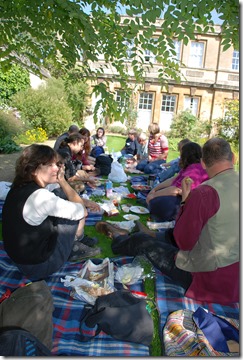
Last night I began reading some of the food gardening blogs in the side bar here and it has sparked a firecracker reaction in my heart and head to sow and plant all manner of interesting edible plants again. Maybe it will happen that I reconnect with old food gardening bloggers as well as find new ones, from far corners of our planet. Facebook has not taken them all away and turned them into clickers and likers; they are still there, writing and sharing their experiences to any who choose to come by. Below are the food gardening bloggers who gathered at the Oxford Botanic Gardens in 2008. None of us had ever met before but we had all read each others blogs.

DSC_0014  Bloggers gathering at Oxford Botanic Gardens, 2008

As winter creeps in and my head loosens its ties to being a wholefoods sole-trader the spaces will be filled with the inner warmth that comes with sorting and sourcing seeds, reading and writing about food gardening and planning for more nooks in my garden, to grow unusual vegetables. I look forward to working in the cold, misty, winter garden, rugged up and conscious of the life there; in the soil, in the trees, in the pond and in the sky.

My house is full of books about growing and cooking. During these past 8 years I have not stopped buying and reading them. Now the future will be about the doing and the eating and the sharing and the pure joy of it all.

Life is good and I am almost there…..

Friday, June 3, 2016

The Chicken Feed Dilemma

I have been recently thinking about animal feed; for chooks in particular but all farm animals, in the bigger picture. Let’s think about my situation where I have 6 chooks, for eggs. Every morning I give them 2 cups of mixed grain, Australian grown, then in the afternoon I give them more grain, this time organic, Australian feed wheat (ie complete with some chaff and unwinnowed). This make about 3 cups of grain / day and keeps me in eggs all year round, plus I have plenty to give away to son Hugh and even a friend or two, at times.

Using our agricultural land to grow food for animals is worth thinking about carefully, when there are people without enough food, land cleared means native habitat destroyed and then there are the fertilisers, machinery and fossil fuels used to grow, harvest, package and transport it all.

I am feeding grain to 6 chooks and getting eggs, so I think that is a good use for 3 cups of grain / day. However, what about when my chooks get older and are no longer laying? Is it right, on all levels, to keep feeding them? Multiply that by the number of people who have chooks just in Tasmania and we can see that tonnes of grain would be going to old chooks (never mind to old horses and donkeys and alpacas and goats and so on).

Most people stop at the edge of thinking and say “Oh I don’t kill anything and my chooks can live for as long as they like (and therefore I am humane and a nice person).” However, just think about this in relation to native animal and plant survival, CO2 production, fossil fuel usage and a myriad of other, deeper concerns.

Is it ok for you to be “kind” but at the same time be killing wildlife somewhere else, where your chook grain comes from? Is it ok to be “humane” but at the same time be adding to climate change, peak oil, mining and transport problems?

I don’t think we can continue to stop thinking at our property boundary. I think that is precisely how we got into this climate change and earth destruction dilemma in the first place; putting our personal desires before the good of the whole. It may sound harsh to some, but it is far more humane, nice and kind to put old chooks into the stock pot or even into the compost heap.

Friday, April 15, 2016

The hose and the skein of autumn

Autumn is that season when we may have the last of our summer vegetables still ripening while the nuts are starting to fall, but, as the days shorten and cool, the first of the new season’s leaves are emerging too. It is a glorious season for the home gardener and one I think a lot of people let slip by, unappreciated.

Life is like a skein of wool; keep it whole and you remain cosy and protected. The more you unravel it, the more you have to deal with the consequences but also the more opportunities it reveals. And so it is with the food garden in autumn!

I find the hurly burly of the spring garden stressful. I never seem to get ahead. Christmas looms, in a flash the grass is as high as an elephant's eye and seeds need to be constantly sown and seedlings tended to ensure a long summer vegetable harvest.

As I stand with the hose this dry autumn day, I am relaxed. Dew makes everything look fresh, flashes of red of the last of the tiny, wild strawberries and regular ones too are dotted about, enticing the gardener to wander further, nibbling here and there as I water. Fully ripe, the deep red, delicious, Chilean guava fruits are so abundant that I put the hose down in order to gorge on them before moving on.

I am careful not to stand on any self-sown chicory plants which colour the paths with their brilliant greens, reds and various markings, all of which are being constantly and gently harvested to add to my salads. Soon, their bitterness will recede with the cold of winter and larger leaves can be picked. Chicories are the beauty queens of the winter garden in Europe but are vastly under-valued here, despite my almost daily exclamations of delight to whoever will listen! I especially love the French “endive” (also called witlof by the English, but which is far superior in France than anywhere else), and the French “chicoree frise” which wear vast bonnets in the fields of France and emerges sweet and crisp but which I love, even without its blanched leaves, if picked young from your own garden.

Glorious chicories, bean jewels, first calendulas, amaranth tassles and the chooks

While I wait for the very last of my bean pods to crisp up, brassicas such as broccoli, purple sprouting broccoli and red cabbages are growing in pots in my greenhouse, ready for transplanting to the resulting nitrogen rich bed. I am not watering these old bean plants now, so I turn the nozzle off and fossick through the dilapidated mass, searching for brown, crisp, dry pods, plump and ripe with dried beans inside. Leaving them to hang there too long results in insects burrowing in and having a feast. I put the half dozen pods in my pocket to add to my inside stash later and pick up the hose again.

Next is my winter greens bed, planted out a few weeks ago and looking fabulous, despite the encroaching shade from the lower angle of the sun and the frosty hollow that it occupies. Winter leaves are thoroughly adaptable to shade, frost and even snow, bouncing back up and throwing off the weight of ice in the hardest and coldest winter weather. The trick is to get them well advanced before mid-May when the short day length, the soft light and cold nights reduce their capacity to grow without big solar panels to capture every second of good light to make growth, not just survive.

This bed was well prepared with compost and deep hay. Consequently, it needs very little watering and I have started picking a few leaves from the lettuce, mizuna and wasabi greens already. I pick and nibble and leave the hose for now. The tomatoes also have needed very little water, with this deep hay method, despite it being warm and terribly dry for months. I have never had so many huge, luscious, delicious tomatoes and the plants are still deep green and healthy in mid-April which is incredible.

I water an unmulched area of kale and coriander and celtuce. Why did I not include this patch in my deep hay experiment? Goodness, I don’t know and now wish I had! It is much easier to plant into a mulched garden than to mulch it later. Oh well, I water it well and move on….

I find it is important to be constantly planting parsley or risk the cook’s nightmare of running out in winter, when it is too late to sow more! This seems to be an excellent year for parsley as not only have I planted consecutive crops but also it has self sown in thick patches which are growing dark green and fabulously; much better than those I planted.

Just about back where I started, I water the walking onions a friend gave me recently, which have now shot out wonderfully and look strong enough to get to a good size before mid May. Lots of fennel are coming up around the edges of the deep hay so I water them too. The Tasmanian purple garlic are in and should emerge soon but I won’t water them until they do.

Walking past the main herb garden I stop to nibble on the flowers of the garlic chives and put some in my pocket too, to add to my salad for lunch. They are crunchy and sweet and very garlicky; almost enough to make my eyes water! While I water them, even though they don’t ask for it, I notice the red-ribbed dock is again coming up from its summer hibernation. In a frosty, winter garden it shines like a beacon to me when I am at the kitchen sink. Even if I never ate it, I would still love it.

Out near the front door, the quince is laden with enticing, big, yellow globes, attracting attention from every visitor, to some of whom I give one or two…. if they are drooling! Many artichokes and cardoons are now shooting and growing like the wind. Also by the front door are my saffron bulbs which are in full production of the earthy saffron filaments I adore. Last night I put my own fresh saffron into my tagine dinner. How exciting, even though I only had 9 threads. I did add a pinch of bought saffron but I am sure mine tasted better :-)

There is much more, like the Cape Gooseberry jungle in my greenhouse, with fruits that have not stopped for nearly 2 years, the new goji berry by the fence, the limes ripening on the front verandah, the lemon which I am protecting this winter with a courtyard of hay bales around it, the sweet potato experiment and the tamarillo about to burst out through the top of the greenhouse and I am not sure what to do about it…… and so on and so on.

As I sit here in the dawn at my computer, with the imaginary hose in my hand, it is such a joy to wander vicariously through my garden, unravelling the skein of garden food, friends who have given me plants and life’s images from where I first had vegetable experiences in far off countries. Life is short; get there fast then take it slow. I am there and really enjoying the slow life of autumn in the food garden.
Tuesday, March 22, 2016

7 Days and 7 Minutes Rye Bread

It is common for people to focus on the slips and stings of life’s journey but I prefer to ponder the diamonds and jewels collected along the way. One such for me has been a chance encounter about 6 years ago that resulted in what is now my passion for sourdough bread.

I have never eaten a lot of bread and still don’t but I learned what good bread was as a child, when my mother started making organic, wholemeal bread with fresh yeast. Sunday night tea was invariably left-over roast chicken with salad and a slice or two of her excellent bread, with lashings of butter, followed by fruit salad and ice cream. Only on Sundays did we eat in front of the TV because we all loved watching Young Talent Time!

How another 45 years slipped by without me discovering the joys of making sourdough bread is a mystery but I now rarely eat any but my own sourdough breads. I must say, though, that when I visit my 93 year old mother I do still love eating her freshly made, wholemeal, fresh yeast bread.

I run workshops about the sourdough method I use and those workshops have helped support me these last 5 years. In fact, if I could find a way to run more of them, I could happily give up various other parts of my work as I love giving the workshops as much as the participants love receiving them.

I describe my sourdough method as an easy, foolproof way to make nutritious, delicious bread. So it continues to amaze me that so many books are written about sourdough baking, and many of them very complicated, because sourdough is an ancient creation and is incredibly simple and natural. Most books have recipes that add all manner of ingredients to the basic loaf which all sound fabulous but which I find detract from the taste of a truly excellent sourdough flavour.

There is one book I do love: The Handmade Loaf by Dan Lepard. It is the story of Dan’s travels through Europe, Ireland, Scandinavia, Russia and more, recounting the villagers, grain farmers, wine makers, bakers, millers and grandmothers who have made sourdough bread using whatever grew in their climate and was available cheaply, since the dawn of time. It is a treasure of innovation and history and teaches you that fermentation has been harnessed by mankind throughout human history and, really, almost anything will ferment and some of the leftovers from other products (like grape skins from wine making) make exceptionally good bread ingredients.

He does not use exactly my method but the recipes are easily adapted. One of my favourites is a combination of two of Dan’s discoveries, reworked by me to include sprouted, rather than cooked, rye grains as a substantial part of the loaf. I call it “7 days and 7 minutes rye bread” because it takes 7 days from the minute you decide to make it, until you can actually eat it, but it only takes 7 minutes of your time in total!

7 Days and 7 Minutes Rye Bread

image

Day 1: weigh out 300g of organic rye grains. Put into a bowl, cover well with water and leave overnight.

Day 2: Strain off water. Place the rye grains into a damp calico bag and tie that to a wooden spoon over a deep enough bowl that it hangs without touching the bottom.

Day 3: Fill the bowl with water and let the bag of rye grains soak for 30 minutes. Put the timer on because you don’t want to kill the rye grains by drowning them! Tip the water out and let them hang again.

Day 4: Open the bag. The rye grains will probably be just sprouting. If not then repeat day 3. Once they are just sprouting, remove from the bag, put into a sieve and wash well. Put them back into the bowl and pour over 250ml white wine. Stir and leave all day.

Meanwhile you need to feed the rye sourdough starter twice during this day so you are ready to make the loaf in the evening.

To make the loaf (evening of day 4):

Strain the wine from the rye grains and save both! Beat together 200g starter +the strained wine + water to make up to 150g. Mix in 400g of the rye grains (save the rest, about 1/2 cup, to put in a soup / stew / another loaf of bread).

In another bowl mix 250g organic, wholemeal rye flour + 1 tsp salt. Stir in the contents of the first bowl. It will be a sticky dough. Rye has very little gluten so there is no need to do 2 risings. Simply grease a small loaf tin and dust it with rye flour. (I use a loaf tin that will fit inside my cast iron pot for easy baking.) Press the dough gently into the tin and make an even top. Cover lightly and leave at room temperature for 15 hours….

Day 5: Heat the cast iron pot for 30 minutes at 240C. Bake the loaf as normal…. 35 minutes with the lid on at 240C then 15 minutes with the lid off at 180C. Remove from the oven but put the lid back on and allow it to cool all day in the pot.

Evening of day 5: Remove it from the pot and the tin. At this point it will be sticky and damp underneath. Don’t worry! I wrap it in a beeswax cloth, but Dan says put the loaf in a lightly oiled, brown paper bag.

Day 6: Do nothing! Do not eat it yet!

Day 7: Ok, now you may have a slice for lunch. If it is still a little damp, wait until day 8. It will be fabulous and you will be starting on the next 7 days and 7 minutes rye bread process.

Now, if we all took 7 days to make our own bread, instead of buying bread, we’d all be healthier and happier! This recipe is dedicated to Jan Howard, who kindly showed me how to make sourdough bread back in 2010 when I first moved to Tasmania and who is originally from San Francisco and told me about Tartine.

image

Friday, May 8, 2015

What has happened to our expectations to grow food?

Every day at the moment governments are making announcements about budgets, taxes, welfare, childcare, big and small business incentives, superannuation, mental health, hospital spending etc etc but never, ever do they broach the subject of self-sufficiency or self-reliance as goals for Australians. It is politically incorrect to expect people to get out and grow their food, join a community garden and become skilled in relying on themselves. However, the simple act of doing this would, to a large extent, overcome many of our national woes.

I enjoy learning about the ancient and more recent history of civilisations and their foods. Up until almost the 21st century, almost every person on earth either grew some food or had relatives that did. Stop and think about that for a moment….. your parents and / or grandparents no doubt fitted this statement and had vegetable gardens and fruit trees in the back yard. In only one or 2 generations people have started to rely on others, unknown and as far away as the other side of the world, to provide nourishment for their families. At the same time, there has been a huge increase in obesity, depression, stress-related, chemical-residue related  and diet-related illnesses.

Interestingly, growing food has become a middle-class activity, seen as something you do in your spare time, after you have bought all the accoutrements that modern-day food gardeners seem to “need” such as raised garden beds and soil (as though the soil in the ground is not good enough these days!).

I am reading a wonderful book, given to me by my fabulous neighbour, Jilly, who recently blew in, in full wet weather gear, in the midst of the coldest and wettest day this year. We sat by the fire and talked for 2 hours, sharing interesting snippets about books, gardening and life. We seem to get together only about once a year but Jilly’s amazing knowledge of plants, history and everything in between keep me inspired until our next coffee. I now look at the old lino pattern on my kitchen floor as steeped in history, instead of annoying!

The book is called “The Nature of Gardens” and is a collection of essays brought together by Peter Timms. It sounds dry and just another intellectual, middle class look at garden design etc but I assure you it is not. I recommend it to anyone who has read this far through this blog piece!!

image

The first essay and my mother’s stories of life during The Depression have brought me to my laptop to write about the recent past’s expectation that you grew as much as you could and the poorer you were, the more you grew. If your job was not well paid or not permanent, you at least knew your family was going to eat well. This essay points out the interesting fact that when workers in the mines and in the coal and steel industries went on strike in Newcastle, NSW it was prolonged affair and they would not relent. This was possible because these same men all had food gardens so, even with no income, their families ate well. In fact, the free time afforded them because of the strikes meant that jobs in the garden and around the house could be done, and vegetable gardens better tended than usual. This is called resilience and is sorely lacking today.

image

If I had one day to rule this country, I would insist that welfare would include assistance for you to learn to grow food and even an insistence that you join a community garden where you would gain not just hands-on know how but broaden your social circle and gain a sense of community and self resilience. I know from experience how beneficial food gardening with others is to every single person who joins a community garden. But I also know that insisting people do something is not the best way to get them to do it! People who are transient and those who have short or long term rental are given a place to base themselves by belonging to a community garden. Once you get into a community garden then, even if you move, you take with you the confidence to find another, wherever you go. It is like having an extended family; always there and ready to nourish your body and soul.

image

At the Cygnet Community Garden we donate fresh vegetables weekly to the Uniting Care Food Aid in the same street as the community garden but I want to offer to walk with the recipients, one at a time, to the community garden and invite them, quietly and without preaching to them, to come along. This is my new goal….. if you have any helpful ideas of how to make this small gesture work please feel free to share them with me.

image

Thursday, November 20, 2014

The Australian Outer Hebrides

I am in Adelaide for a couple of weeks, celebrating my mother’s 92nd birthday, spending time with son Hugh, gardening with friends, walking on the beach and having the odd swim in a much warmer sea than ever happens in Tasmania. Two glorious weeks of November weather; balmy nights, warm – hot days and streets lined with the wonderful jacaranda trees in full bloom everywhere I go.

As I drive familiar streets and take the freeway in the Adelaide Hills I sometimes listen to 891, Adelaide’s ABC radio station. Yesterday I heard the claim that in a study of Australian housing it was found that Adelaide has the biggest average house size in Australia and Tasmania, the smallest.

This I can verify as I found it amazing, when I moved to Tasmania, that the houses were so small. The house I bought is what I thought was very small; a little, old cottage, but which Tasmanian visitors asked of me when they saw it for the first time “Why do you need such a big house?” !!

imageMany people, when building in Tasmania, struggle to see why the minimum house size allowable to build is now 70 square metres, up from the previous 60 square metres. I know a few people who live very comfortably in their 60m2 houses, such as this one. In Adelaide everyone wants to build the maximum size that will fit on their block of land and I doubt anyone even knows the minimum house size, whereas in Tasmania most people want a small house no matter how much land they have.

This morning I have been re-reading a wonderful book from my mother’s bookshelves, called The Sea for Breakfast by Lillian Beckwith. These gorgeous books, written in the 1960’s follow the writer’s stay and subsequent move to the Outer Hebrides and are a joy to read for transportation to a simple but testing life, rich in Gaelic  language and traditions, of a small, island community.

In some ways the books reflect a life not dis-similar to some parts of life in Tasmania which often seems to me as I read the books, more related to the Hebrides than mainland Australia. One of these similarities relates to an attitude to work. Statistics put Tasmanians on the bottom of the list of per capita earnings in Australia but, from my perspective, apart from the unemployed, most people earn enough to have a deliciously simple life, scouring tip-shops and second hand shops for cast off clothes, pots and pans, garden tools and timber for renovations etc and swapping this for that with others, at every opportunity. Time and work are often shared, and customers and friends all blend in together.

I love the line in The Sea for Breakfast where the woman is wanting to get some small windows made bigger in her newly acquired, tiny, stone cottage and enquires about who could do the work for her. A man called Erchy is suggested who “quite likes a bit of work now and then, just as a change, when he can spare the time”. This perfectly describes a lot of people in Tasmania too and I think that is one of the things that makes Tasmania foreign to the rest of Australia, on the whole. Visiting Adelaide after about 18 months of my 4.5 years of simple life at the bottom of Tasmania has highlighted this difference more than ever.

None of this is a criticism of anyone or of any place; it is simply fact and interesting to notice!

Life is good; get there fast then take it slow.

Thursday, November 6, 2014

Labne, asparagus and quail eggs, all on a Cygnet Thursday

By the end of my Thursday afternoon various goodies had assembled on my kitchen table. Thursdays are wonderful here in Cygnet! We start the day at 9.30am with Happy Swappers in the Cygnet Community Garden, where anyone can bring home grown fruit or veg, home made goodies, food plants and cuttings or seeds and place them on the sharing table. Then each person is free to take whatever they choose from the table. We chat and laugh and all go away with something from someone else. Today I took some rhubarb and a jar of Sally’s vegetable stock.

Next we spend 2 hours gardening in the community garden, and Jo picks a selection of whatever is ready to harvest and we share that too. Today I took some globe artichokes, a couple of hakurei turnips and a few handsful of young broad beans.

There is always something new to try at lunch time in the community garden as they are all such good cooks, with a broad range of skills and cultures. A few weeks ago Sita brought some labne which she had made and it was so delicious I made some for myself. It has been in the fridge developing flavour ever since. 

Back home by 1pm I clean myself up and get ready for customers to my home shop, The Garden Shed and Pantry. Today I had a visit from Morag who wanted some kefir grains. She brought me a dozen quail eggs and we made a swap. Yesterday Erika gave me some asparagus of which a few spears were left over and I also had a left over leek from my own garden.

I have a neighbour who loves to grow radishes and also loves to eat my sourdough bread so we do a swap; I give him a loaf of bread every so often and he keeps me supplied with radishes.

On my preserves shelf I still have a few jars of passata from last summer’s tomatoes. On my bench I have some salt made in the oceans of Tasmania…. the only bought thing in this whole episode!

So, I cooked the artichokes and drizzled them with lemon juice and pepper. I boiled the quail eggs for 4 minutes. as Morag said, to hard boil them, then removed the shells. I sautéed the leek, gradually added the rest of the ingredients and served it topped with my labne balls.

I must say that this was one of the tastiest throw-together meals I have ever made; the labne being a key in making it so. I had rolled the drained yoghurt in herbes de provence, which was a perfect addition, as it accidentally turns out!

The lightly hard boiled quail eggs were each a delightful mouth experience as they were popped by the tongue. Nothing beats asparagus spears and those first, young broad beans of the season are an annual treat, after months of leaves and broccoli.

I thought of taking a photo….. but I was more attracted to eating than photography by this time. Compared to all the meals I have eaten out in the last 6 months, which truthfully is not many, this is way better and that is exactly why I don’t eat out much. Exceptional ingredients, with no food miles, grown with love, often shared with love and each with a story will always win.

Now it is time to make rhubarb crumble and relax.

Life is good and sometimes life is bloody good. Every now and then life is great.

Monday, October 6, 2014

No work and all play makes me very happy today!

A friend came by and brought me some of her wonderful asparagus this morning and all day, on and off, I have been thinking about how I would have it tonight….. raw in a salad, steamed as a vegetable, baked in a tart…. or what!

So, about 5pm I wandered out into the garden with my basket to see what was there that would make up my mind for me about cooking the asparagus. (I had already eaten quite a bit raw during the day.)

First there were the chooks to say hello to and some eggs to collect. Next I noticed that one of the chicories was stretching upwards before going to seed, so I decided to cut most of it off, as I really love chicory. The rest of it will shoot again and go to seed which will self sow and give me next more chicory next winter and spring, without me having to do a thing.

Near that chicory is a self sown red cabbage that is simultaneously growing a wonderful cabbage and sending up shoots with flowers, in a circle around the head. I picked one of the flower shoots and it was so sweet that I picked most of the rest of them, leaving the head for another day. I left a few shoots to continue flowering and set seeds which will self sow and provide me with red cabbages next winter and spring, without me having to do anything.

Earlier today I did some mowing and noticed how wonderful the dill is looking. These dill plants were dug up from a self sown clump that was very congested and moved to a more open area where they have done really well. So, I cut some fronds. I am surprised they have not gone to seed yet but soon they will and I will leave a few to self sow so I will have dill next winter and spring without any work at all from me.

There is one enormous frilly mustard reaching to the heavens. This gorgeous, lime green, frilly, beautiful plant is self sown. I am not sure why I didn’t get many this year but I will let this one go and hopefully it will give me more next year, without me having to sow any at all. I picked some of the pretty leaves as I passed by.

I looked over into the paddock next to my vegetable garden, where dairy cows sometimes graze. There, pecking away at this and that, were 3 of my chooks. I opened up the bottom of the chook yard fence a few years ago, just enough for a chook to get under, so my lucky chooks have free range over maybe 20 acres or more but they don’t don’t go that far away. I threw them some snails I found slithering through the perennial leeks and watched them fight over them.

While I was there, I cut some of the leeks which are so dense now that I just cut them at the ground and use them like spring onions, green tops and all. I love this patch which multiplies by growing little nodules around each leek which then grow into more leeks. If I thinned them out it would take me hours so I don’t bother. I love them thin and sweet. Eventually they will go to seed and grow fabulously beautiful heads of flowers that the bees will flock to and next winter and spring I will start picking the fresh leeks again, without having to do anything in the meantime.

image

By this time my basket was full and dinner was pretty much worked out, without me having to decide a thing. So, I slowly stewed the chopped leeks and most of the rest, in olive oil with the lid on then added the asparagus, s and p, and several beaten eggs mixed with some milk. When it was nearly set I grated over some good, sharpish, English cheddar (one of my ridiculous indulgences!) and put it under the grill to brown a little.

As I sat and ate my dinner I thought of the lovely 20 minutes or so I had spent in the garden, the fun it was tossing snails over the fence and watching the chooks race to get them and how nice it was that Erika had bothered to drop in on her way to work early this morning to give me some of her asparagus. And how I don’t even have to sow any seeds or do any work at all for this dinner to grow itself in my garden and my friend’s garden next year.

Life is good. Let things go a bit and watch them come back.

image
Look at the colour of that!
Red cabbage shoots about to flower.
image
                       I love dill.
image
Fat Bastard asparagus from Erika. Beautiful.
image
The final result of 20 minutes in the garden and 10 minutes in the kitchen. All of which made me smile! And there’s leftovers!
image   Punnets of cucumber  seedlings from yesterday’s Cygnet market. Soon to be a summer lunch ingredient.
And so the seasons go round and round….
image


Thursday, August 21, 2014

More than just a garden…

This story is evolving as I write.

image

One day 2 years or so ago a woman came to the Cygnet Community Garden for the first time. She was from Queensland, she said, and was here doing some house sitting. The regulars at the garden showed her around and she knuckled down amongst us for a couple of hours gardening. She was nice to be with and was most impressed with our lunch spread when we stopped work at 12 noon. I hoped she would come again. She did and she continued to, whenever her house sitting brought her close enough to Cygnet.

Then, one day she said she was going back to Queensland to see her family and may or may not come back to Cygnet, depending on if she could find more house sitting. We missed her a lot and every week we asked each other if anyone had heard from her. It wasn’t long before someone had a phone call and someone else had an email, all suggesting that she was returning soon, and that her daughter and grand children would be coming for a visit too, in a new house sitting arrangement she had found in Randall’s Bay, not far from Cygnet.

She had found a little house by the sea and decided she wanted to stay….. forever. It soothes your soul by the sea and she had become quite fond of us at the community garden and some others in a craft group she had joined.

To cut a long story short, she has sold up in Queensland and bought a house in Cygnet, not Randall’s Bay, after all. She is arriving this week and we have some house warming surprises for her; I dare not say what they are as she may read this blog piece! But I suspect the best present will be seeing the faces of friends she has already made and knowing that they will help her settle in and adapt to her new life.

Community gardens are deep. Rivers run through them and energy flows in many directions. Our community garden is a haphazard, grass-infested, quite unkempt looking garden that those who look with their hearts, minds and souls (rather than just their eyes) see as a wonderful, strong, peaceful web where the food produced is only a part of the story.

Saturday, June 7, 2014

5 organic bananas or a piece of cake

There are 3 busy cafes in Cygnet. All have lots of beautiful cakes which are hungrily eaten every day, sometimes by me. One piece of cake is around $5. No-one bats an eye lid at the price.

There is 1 organic fruit and veg shop, Cygnet Garden Larder, which is equally busy. I bought 5 organic bananas for $5. The lovely girl serving looked shocked when she told me the price.

The people eating cakes in the cafes are the same people who tell me they cannot afford organic fruit and vegetables.

These people drive 20kms to a supermarket which has chemically grown fruit and veg.

What has happened to the world?

On Cygnet Market days I like to buy organic fruit and veg from the local market gardeners who have stalls outside on the street. One of them is Alex from Golden Valley Farm. The queue for his vegetables, picked that morning at dawn, stretches down the street if I don’t get out there early enough. His produce is priced to make a living for him and his family and so it should be.

I don’t have much money but I don’t even look at his prices. I grow what I can in my garden and the community garden and buy what I need from Alex. I would much rather have the best, organic vegetables I have ever seen, from a man I know, than drive to a big supermarket and stand in a check-out queue with stuff my mother would not even call food.

It used to bother me that I was preaching to the converted when I talked about such things with my friends and could not seem to reach those that would benefit most from conversion. Now I have stopped beating my head against the wall…. or at least maybe I will soon!

Life is good. Join Alex’s queue.image

image

Saturday, March 15, 2014

Breath-taking Tasmania… 5 days by kayak and on foot

It was like paddling a kayak through a mirror reflecting a rain forest so dense and so full of diversity that we felt the silence fill our senses and it was hard to tell where the surface of the water was….

Nothing between me and South Africa… paddling to Ocean Beach, down the Henty River in the unusual and glorious, summer sunshine where 3 days without rain is a very rare treat!

And paddling on Lake St. Clair, where wilderness meets hydro- electricity…. see the pumping station, built in the days when beautiful architecture ruled.

Shadow Lake…. a full day’s walk up to a hanging lake through another magical forest…

image

where I had never seen so many fallen trees, many from the storm I wrote about recently but many more from the long life of this forest…. this one had had a slice cut out to make way for walkers.

You can see more photos here.

Monday, March 3, 2014

The Singing Swans are born!

Cygnet Sailing Club’s 150th Regatta…. Everything, from the tiniest rowing and sailing boats, through every shape, size and age boats to these gorgeous ships will be in Cygnet this week!

This morning the autumn mist sat on the hills, the sea was glassy calm and the weather mild as we set off rowing our skiff, 6 women, some who built her too. We started to sing! Our ideas and courage grew as we rowed…. we formed The Singing Swans… one of the group is going to teach us sea shanties and we will sing our way up and down the Tasmanian waterways, every Monday morning!!

Life is good. Again. At last.

Sunday, December 29, 2013

Gardening in public…

I know I keep going on about it, but Carol and I have done an amazing job with the Cygnet Library garden. I spent a couple of hours there on Saturday, weeding, spreading a bit of mulch, planting some new things and watering and I felt like I was 10’ tall. I am so proud of it.

Every plant was chosen for several reasons – first it had to be edible, next it had to cope with VERY shallow soil and lastly, it had to be pretty. And I am pleased to say that, so far, they all score 10/10. Another reason was…. it had to be cheap or free!

We only had a budget of $150 and we spent every cent of that on plants, fertilizer, signage etc. Now we are running on empty but the Cygnet library-goers are regularly donating to a box I put on the counter inside and that is all I now have to keep the garden up to scratch.

It is completely different gardening on a narrow strip of ground between the library and the carpark, compared to in my private acre. I really quite like seeing people constantly coming and going, cars driving in then out and every now and then someone coming over for a chat. Today a German tourist came and sat on the bench and used the free wi-fi provided by the library. We were both pleasantly surprised that it was available even though the library was closed.

A local came and said hello and I picked her a lettuce and some herbs. You see, the garden is for everyone; not much use growing herbs and food if no-one eats it. I wrote a new sign on plastic milk bottle that I put upside down on a stake. It tells you what is ready to pick and encourages everyone to join in. Right now you can pick a few broad beans, some lettuce, kale flowers, all sorts of herbs including marjoram, thyme, rosemary and Vietnamese mint plus edible flowers like marigolds.

The red cabbage is forming a heart now and the black currants are ripening well. Don’t tell anyone but I ate 2 deliciously ripe ones today. I planted out a caraway plant and lots of garlic and plain chives which will clump up and flower later in summer – autumn. I am always looking at the garden with an eye to what will be finishing soon and choosing a few more things to put in to take their place when the time comes. This is how the donations are used.

I am hoping to take this theme up and down the streets of Cygnet, wherever I can get permission to add food to a piece of ground, no matter how small. I have already asked at the Commonwealth Bank and look forward to the reply when the bank opens again!

Happy food gardening!

Monday, September 2, 2013

Sally’s Chinese Noodle Soup for breakfast, lunch or dinner

Sally and I run separate cooking classes. Sally is Chinese and her classes are fabulous and very popular. I mostly do sourdough bread workshops but a few other things too. We each send out emails advertising our next classes. I forward her emails to people on my list and Sally forwards my emails to her list…… it is all very complicated and sometimes people end up getting the emails several times. So today I went to Sally’s beautiful new house and we combined our lists.

image

Then Sally made us a quick lunch. It was so delicious and simple. Here’s what she did:

Into a wok put about 6 Sichuan pepper flowers and turn up the heat. Then add a dash of rice bran / peanut oil. Leave until it is really hot and the peppercorns turn black.

Turn off the heat and let it cool while you chop a spring onion and slice a piece of ginger and add then to the pan gently so it does not splatter and burn you. Leave for a couple of minutes.

Turn the heat back on and add some bottled tomatoes, about 1 – 2 cups  water, a few fermented black beans and a dash of soy sauce.

When this is coming to the boil, add a good handful of thin, dry noodles and cook as per the packet.

Meanwhile chop some greens from the garden and add them to the wok just before serving, along with 2 raw eggs (which cook gently in the hot soup). Drizzle over some sesame oil.

Top with some edible flowers, such as these bok choy. The whole thing took about 10 minutes. Sally and her husband often have this for breakfast in winter. Serves 2.

Sally made fresh soy milk too, which she usually drinks hot, during the afternoon, with a teaspoon of honey. She has made it in a Thermomix but says it works better in her Chinese soy milk machine which looks just like this one. This took about the same amount of time as the soup, after she had soaked the soy beans overnight. The soy milk tasted so different and fresh compared to the commercial stuff from the shops.

The lunch and the soy milk were a real treat. Sitting there talking to Sally was a very relaxing and lovely way to spend the morning and, as it turned out, some of the afternoon as well !! I will definitely make the soup often and I have asked Sally if I can provide her with all the organic, Australian soy beans she ever needs, if she will make me a litre of soy milk once a week. Nice.

ps Sally uses the pulp left over from making the soy milk, in her spring onion pancakes, with some polenta and egg.

Tuesday, August 20, 2013

Wonderful Winter Edibles from My Garden

It has been freezing outside today and I have spent most of it inside, cooking. About an hour ago, between showers, I took my basket out to pick a salad…. then I took some photos of what I had picked because it just oozes with vitality; so vivid are the colours, so shiny are the leaves, so crisp and so juicy that I just had to share it, even if only on a blog! (Actually most of it is for the local family I cook for on Tuesdays, but a little bit of everything is for me.)

I could go on about bad food choices, bad agriculture, bad governments, bad, bad, bad…. but I am too happy, looking forward to dinner, to think negative things. Nearly everything I picked today was self-sown, requiring no work from me. If only I could help people get to this point; if only they’d want to come to my “Cook with me from my garden” workshops where I could show them how easy, healthy, worthwhile and delicious it is to live this way. 

imageSandra’s vegan rice balls..my way! imageMiners’ lettuce, radicchio, hakurei (Jap turnips), spring onion, mizuna
imageToday’s garden greens and eggs imageSuch shiny parsley….
imageJuicy, crisp, delicious fennel…. imageWinter chicory….
image…and scuplit, Asian greens, etc, all bouncing with vitality. image
Baked pasta, layered with garden veg, topped with home made yoghurt, today’s eggs plus cheese.
imageTasmanian quinoa with snow peas, carrots, lime juice and herbs etc imageMy famous sourdough bread …. that everyone comes to learn to make, in my workshops!

Bon appetit!

ps. You should watch this 6 minute video, to see why I am sooooooo passionate about what I do. And no, I am NOT vegetarian but I only eat meat from animals that once lived in a paddock near me, on land I can see and cared for by people I know.

Tuesday, August 6, 2013

Is this what “inner transition” means?

What kind of brain do you need to make these? And how about the bird; she is definitely thinking outside the square! Thanks, Sally, for the email full of these ideas and more.

boot as nest

    jeans with plants


ladels with plants


watering can fountain

Today I listened to a wonderful podcast about curiosity; who has it and why, what it does to our lives, our brains and our children. You can listen to it here.

Friday, July 26, 2013

Fish Sharing

When I arrived at my house over 3 years ago a wooden fish was living on my bath…. a gift from the previous owners. We co-habited in the bathroom for some time, never totally at ease with one another.
Then I decided to paint the bathroom and well, he (the fish) was left out in the cold, so to speak, in a box of “collectables” I could not quite bring myself to get rid of.
This weekend I have to fit 16 people in my kitchen for an Exotic High Tea Experience and absolutely everything not required has to be moved out….. including that box residing under a table in the corner.
On Tuesday I was, once again, lighting the fire for the evening and was short of light wood….. I took the fish and walked toward the fire but I could not do it; I could not destroy a fish I had lived with for 3 years or more….. so, I put him in the kindling box, to be dealt with another day.
I had thought to take him to a second hand shop but felt it just too ridiculous to hand in a lonely, painted, wooden fish, without a box of other recyclables!
Then a miracle happened! Theresa came to visit and, when I opened the kindling box to get wood for the fire, she saw the lonely fish, lying on his side in the box, and…… fell in love!
image
Fish now lives in a pretty garden, keeping a close eye on the real fish that live in the pond.

I look forward to visiting Fish soon.

Life is good and sometimes it is just plain crazy.

Thursday, July 11, 2013

One creature to another….

I don’t believe in gods. I don’t believe in life having meaning. I don’t understand why people need meaning. Isn’t it enough to be a human, in a world full of beauty, filled with plants and animals, amazing geological structures and incredible events like sunsets and rainbows?

I feel incredibly lucky to be alive. Doesn’t every body? I feel free to be entirely who I want and I take full responsibility for how I am. I rarely even think about this but I have been watching Richard Hawkins’ programme called Sex, Death and the Meaning of Life in which he explores various ways people seek meaning.

It seems to me that a lot of people are bogged down trying to find a meaning or a purpose, when there is none. Humans are not special and they do not have meaning any more than an ant or a cabbage. To me that is entirely liberating. When I am totally responsible for my life it empowers me to take charge of it because if I don’t then my life is a waste of time, time spent waiting for someone or some god or some fate to guide me.

I really think that humans have become entirely self-centred; rarely thinking of the wondrousness of life at all; rarely taking time to watch the light falling on a frosty leaf or listen to the croak of a frog on a pot plant and certainly almost never feeling connected to these things, one creature to another, as I do.

So obsessed are people with meaning and believing in things that if you are not like them, then you are not often allowed to say so…. although I do make a point of saying so, at times. I said so recently, to a dear, Christian friend of mine. I think she felt sorry for me; me not knowing God as she does. We talked about the soul. She said I had a good soul. Evidently God gives us our soul. Well, I said I made my own; I am the accumulation of 54 years of being who I choose to be with life’s ups and downs moulding me along the way.

We were sitting by the window at the shack. Being there, right by the sea, for a great part of my life; seeing and smelling and feeling all that such an opportunity has given me, has definitely influenced my love of and connection to everything around me. That is where my soul comes from, not from a god.

Get rid of the gods and we would get rid of most of the fighting in the world. How can you fight with someone when you are standing under a beautiful tree or cooling your feet as you walk in the sea or watching an insect crawl on your hand or smelling the delicious aroma of a mango?

Sunday, June 9, 2013

Portable Vegetable Garden Structures at Golden Valley Farm

Alex is our local market gardener…. with a difference! He used to be a chef at Parliament House in Canberra, has studied all kinds of interesting things at uni. and has gone into this market garden idea with his eyes wide open and with a plan to make the business work, for his young family.

Picture

For a start he and his wife bought the perfect piece of land just a 30 minute walk from the main street of Cygnet, in Golden Valley; gently sloping, north-facing, with good soil, 2 spring fed dams and quite a distance from any native bush (so very few animal problems).

They built a pretty, little house and turned a tiny little shed into a 1/2 glass, 1/2 solid, seedling house. Then Alex baled up the hay cut from his land in summer and put the bales side by side and end to end to make a rectangle of covered grass, using up all the bales. In spring he removed the bales, hoed the soil and began to sow the seeds of his new life.

He and I have a similar philosophy about organic food production; which includes NOT using massive amounts of plastic for poly tunnels. But rather, using what you have in the way of climate to produce seasonal, organic food.

Sometimes, at this time of year, young seedlings need a bit of extra warmth to get going because the soil is already very cold. So, Alex has made some movable cloches, sized to fit his beds. On his blog Golden Valley Farm you can find all the instructions to make your own.

Picture

As he mentions in his post, the plastic can be removed in summer and the frame fitted with netting to keep off the cabbage moths, or shade cloth to protect young seedlings from the heat.

image


So, when you see a beaming Alex at his stall at the Cygnet Market, remember he is the most genuinely organic farmer around and that he was up before dawn, picking vegetables for you to buy.

Never, ever think that his prices are more than his produce is worth!!

Picture

Tuesday, May 28, 2013

An autumn snapshot of food, friends and ingenuity

The weather has been glorious; crisp, Autumn mornings followed by calm, sunny days. I rarely go out for the day but I was invited to a pizza making lunch so I headed off to see what I might see.

imageBob built the pizza oven entirely from second hand bits and pieces from local tip-shops, garage sales and salvage yards…. there’s nothing like a man with a ute, in rural southern Tasmania, to smell a bargain!


imageOut in the countryside here it is impossible to grow vegetables, and many ornamental plants, without protection from wildlife such as wallabies and possums. They don’t just nibble at ground level, as rabbits do, they eat everything, even the bark of many fruit trees, and possums break the branches as they clamber up your new orchard plantings. So, Bob also built a wonderful, netted vegetable garden and glass house from his bargain hunting rounds. And that is where Janet grew all the toppings for our pizzas.

imageThe pizza oven is housed in what I call a hut, but without walls, nestled prettily in the garden. Tasmanian weather can change suddenly and this well thought out hut gives shelter without closing you in from the peaceful garden setting.

It all looks like a million dollars, but land is cheap here and Bob built everything, even the house, and together Janet and Bob have established  the gardens with thought and hard work, without outlaying much money.

image
First, Janet made the dough and let it rest for an hour…..
image
Then came the home-grown toppings and into the oven it went…
image
Janet and Bob checked everything was right in the oven…..
image
A few minutes later it was ready to eat!
image
It didn’t take long to disappear….
image
I think my favourite was the olives and roasted capsicum….

The 20 minute drive back to Cygnet takes my breath away, every time. Wherever you go, there is water….river or sea….

image

There are boats in every nook and cranny…..

image
image
One minute it is calm and sunny…
image
but the weather can change so quickly….

How I found such paradise and how I met such wonderful people, is still a mystery to me.